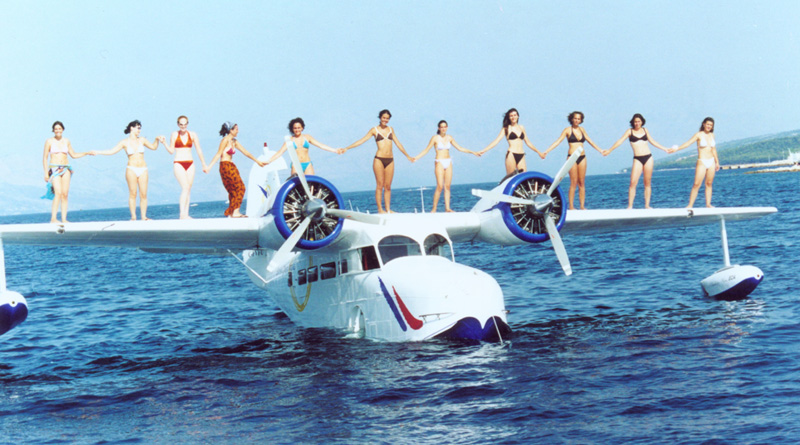

In the Thirties, bankers commuted daily from their country estates by seaplane, but today they fly into New York by helicopter.
In the Thirties, famous businessmen traveled from their Long Island estates and mansions to New York, and to Wall Street on Manhattan, mainly by car, and less often by yacht, to run their companies. Because of the seventy-kilometer distance, a faster aircraft was ordered from a famous seaplane manufacturer in the late thirties for the daily commute, which later became a very successful seaplane type.
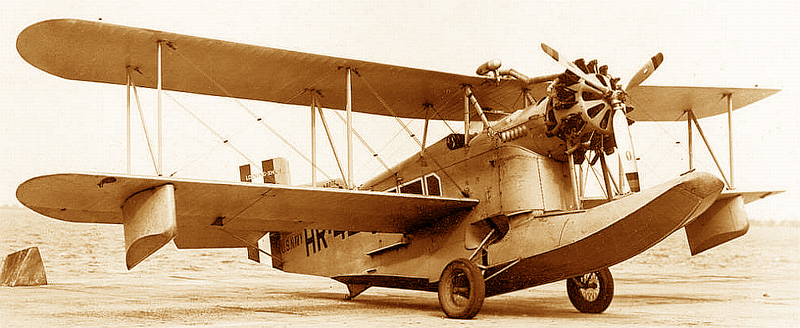
Loening was an aircraft designer and aircraft manufacturer in America in the twenties and thirties. The Loening C-2 model of the seaplane shown in the pictures first flew in the late twenties. Four passengers could travel elegantly in the cabin enclosed in the shoehorn-like hull, and the pilot flew the seaplane in an open seat under the wing.
According to contemporary descriptions, it was a rare, ugly machine, but practical. That’s why a famous corporate lawyer named Smith bought one, who from 1935 used this piloted seaplane to commute daily from the island to his office on Wall Street.
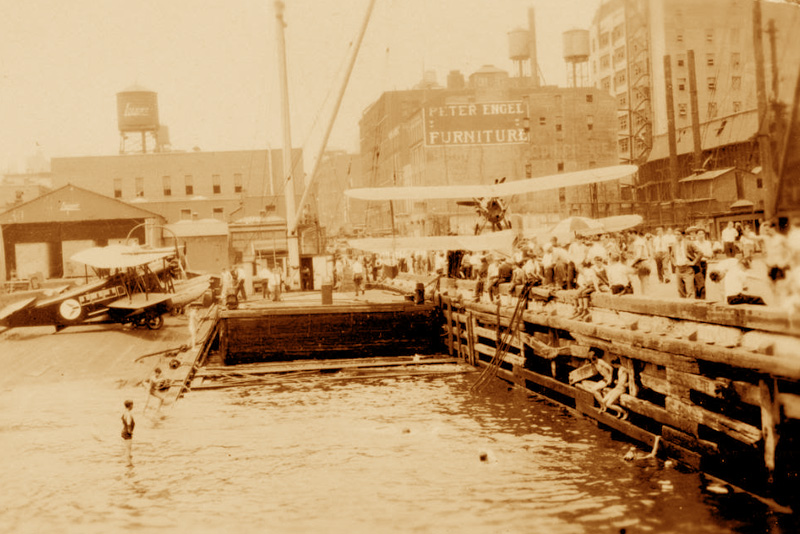
The financial magnates in Manhattan circles liked the lawyer’s daily commute in the air, but they wanted something more elegant-looking seaplane. They persuaded Loening to design them a seaplane with a slightly larger and more streamlined structure.
The designer was already working for the Grumman Aircraft Company at the time, so he included Mr. Grumman, the owner of the company, in the negotiations. Finally, 10 Wall Street businessmen – Morgan, Harriman and an English lord were the most famous – bowed down and provided financial support for the development. Thus was born the Grumman G-21, affectionately nicknamed the Grumman Goose.
From the G21 sketches, the gentlemen quickly accepted the dignified, yacht-shaped boat body, with an upper wing, on which the two engines were built into the wings. Although the first customers had coastal estates, they also took to the water at the end of Wall Street, but they also asked for the earlier wheeled landing gear, which was only half hidden in the fuselage. The seaplane rolled out of the water on a ramp on its landing gear at the dock at the end of Wall Street by the river, so that passengers could get in and out more easily. There were also ramps on the island estates.
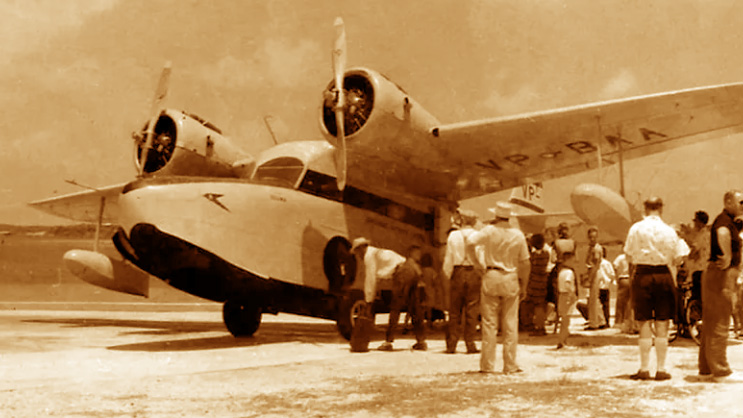
The seaplane already had one or two pilots sitting inside in the front, and behind them the cabin was suitable for the comfortable transport of 4-6 people. The remaining space could accommodate a large luggage compartment, or even a toilet. The ribs of the main wing were wrapped in canvas, and in addition, all the outer covering of the seaplane was made of duralumin.
The gentlemen were not only thinking about the seventy to one hundred kilometer range and the daily commute to Manhattan, but also demanded the maximum from the expected performance. The two 450 horsepower engines, already ordered from Pratt and Whitney, enabled a range of nearly 1,500 kilometers at a cruising speed of 300 km/h. A male flight attendant and a toilet were also a must on a 4-5 hour flight.